
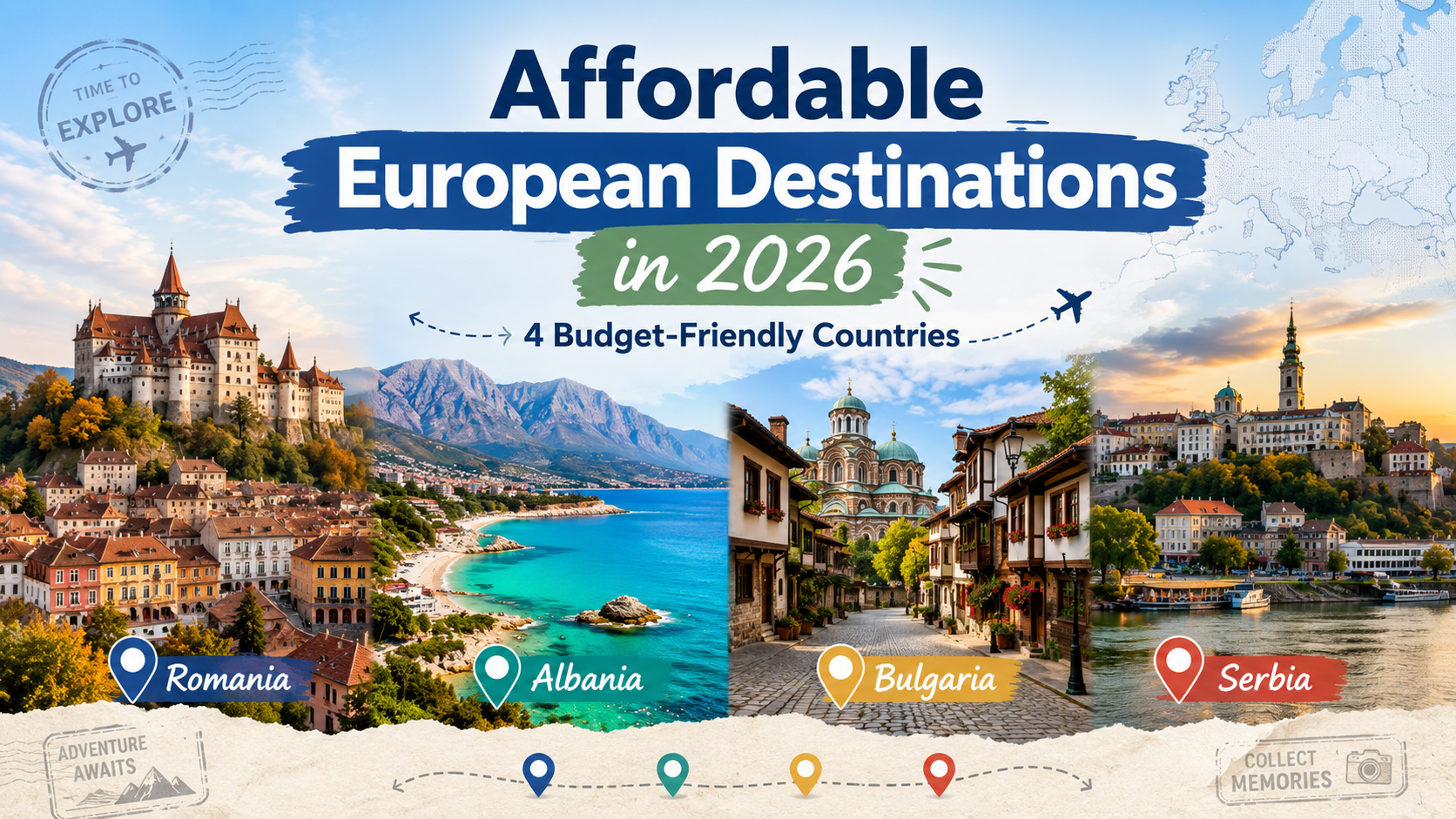
Europe does not have to mean expensive hotels, costly restaurants, and overcrowded attractions. Travelers willing to explore beyond destinations such as Paris, London, and Rome can still find beautiful cities, dramatic landscapes, historic landmarks, and delicious local food at comparatively affordable prices.
Romania, Albania, Bulgaria, and Serbia are frequently recommended for budget-conscious European trips. These destinations offer lower-cost local meals, accommodation, and transportation than many popular Western European countries, although prices vary by city, season, and booking date. Albania, in particular, continues to appear on lists of Europe’s most affordable destinations for food and everyday travel expenses.
Whether you want a cultural city break, a mountain adventure, a beach vacation, or a multi-country Balkan itinerary, these four countries provide excellent value in 2026.
Quick Comparison
| Destination | Best for | Places to consider | Main advantage |
|---|---|---|---|
| Romania | Castles, medieval towns and scenic countryside | Bucharest, Brașov, Sibiu and Sighișoara | Affordable mix of cities and rural attractions |
| Albania | Beaches, mountains and road trips | Tirana, Berat, Gjirokastër, Sarandë and the Albanian Alps | Mediterranean scenery without typical resort prices |
| Bulgaria | History, mountain escapes and Black Sea beaches | Sofia, Plovdiv, Veliko Tarnovo and Nessebar | Low-cost city breaks and varied landscapes |
| Serbia | Food, nightlife, history and river cities | Belgrade, Novi Sad and Niš | Affordable restaurants, entertainment and urban experiences |
1. Romania: Castles, Cities and Transylvanian Scenery
Romania is an excellent choice for travelers who want European history and architecture without paying the prices commonly found in Western European capitals.
Start in Bucharest
Bucharest combines grand architecture, energetic neighborhoods, museums, parks, cafés, and an extensive Old Town. Major attractions include the Palace of Parliament, CEC Palace, the Historic Quarter, and several impressive public buildings located around the city center.
Accommodation outside the busiest part of the Old Town can provide better value, while the metro, buses, and trams make it possible to explore without depending on taxis.
Explore Transylvania
Romania becomes even more memorable when you travel outside the capital. A popular southern Transylvania route connects Bucharest with Sinaia, Brașov, Sighișoara, and Sibiu. The journey can be completed by car, train, or bus, although a rental car offers more freedom for smaller villages and rural attractions.
Brașov is a convenient base for visiting mountain scenery and nearby castles. Sibiu and Sighișoara offer colorful buildings, old town squares, cobblestone streets, and a quieter atmosphere than Bucharest.
Romania’s official tourism information also highlights the fortified churches and Saxon settlements of Transylvania among the country’s major heritage attractions.
How to save money in Romania
Stay in guesthouses or locally operated apartments instead of international hotels. Eat at neighborhood restaurants away from major tourist squares, and use trains or buses for travel between large cities.
A combination of two nights in Bucharest and three or four nights in Transylvania can create an affordable and varied first visit.
2. Albania: Beaches and Mountains at a Lower Price
Albania has become one of Europe’s most talked-about emerging destinations. It appeals to travelers who want clear coastal water, mountain scenery, traditional towns, and a less commercial travel experience.
The country’s tourism resources highlight everything from the Adriatic Coast and Albanian Alps to national parks, historical cities, castles, and UNESCO-listed locations.
Tirana
Tirana is a practical starting point for an Albanian trip. The city offers colorful architecture, cafés, museums, public squares, and easy connections to other parts of the country.
Spend one or two days exploring the capital before traveling inland or toward the coast.
Berat and Gjirokastër
Berat is known for its hillside setting, traditional architecture, old neighborhoods, and castle area. Gjirokastër offers stone houses, steep streets, mountain views, and an impressive historic atmosphere.
Both cities can provide a more relaxed experience than Albania’s popular beach resorts.
The Albanian Riviera
Coastal destinations such as Sarandë, Himarë, and Ksamil attract travelers with turquoise water and Mediterranean scenery. However, accommodation prices can rise considerably during July and August.
Visit in May, June, September, or early October for better room availability, lower prices, and less crowded beaches.
The Albanian Alps
Travelers interested in hiking should consider northern Albania. The Albanian Alps offer mountain villages, valleys, walking routes, and dramatic scenery that feels very different from the southern coastline.
How to save money in Albania
Use local buses where practical, eat at family-run restaurants, and reserve coastal accommodation before the peak summer period. Consider staying slightly outside the center of Sarandë or Ksamil rather than directly beside the beach.
Albania can be particularly affordable for food. Recent budget-travel research identified it among Europe’s lower-cost destinations, with inexpensive street food and comparatively affordable restaurant meals still available.
3. Bulgaria: Historic Cities, Mountains and Black Sea Beaches
Bulgaria offers one of the most diverse affordable trips in Europe. Visitors can explore historic capitals, Roman ruins, monasteries, mountain trails, traditional villages, ski areas, and Black Sea resorts within one country.
The official tourism portal promotes cultural, rural, mountain, spa, ecological, culinary, and seaside travel across Bulgaria.
Sofia
Sofia combines ancient ruins, religious buildings, museums, public parks, and modern city life. Vitosha Mountain is located close to the capital, making it possible to combine sightseeing with hiking or outdoor activities.
The city is suitable for a two- or three-night break and can also serve as a starting point for traveling to Serbia, Romania, Greece, or other Balkan destinations.
Plovdiv
Plovdiv is one of Bulgaria’s most attractive cultural destinations. Its old town, Roman heritage, artistic neighborhoods, and relaxed atmosphere make it a strong alternative to Sofia.
Bulgaria’s tourism portal describes Plovdiv as one of Europe’s oldest cities and highlights its long history and cultural significance.
Veliko Tarnovo
Veliko Tarnovo is an excellent option for travelers who enjoy fortresses, hillside views, traditional streets, and medieval history. It is smaller than Sofia and can offer an affordable base for a quieter Bulgarian experience.
The Black Sea Coast
Nessebar, Burgas, Varna, and smaller seaside communities provide alternatives to more expensive Mediterranean destinations. Sunny Beach can be economical for package vacations, but travelers looking for a calmer experience may prefer historic Nessebar or smaller coastal towns.
Important currency update for 2026
Bulgaria adopted the euro on January 1, 2026, becoming the twenty-first member of the euro area. Travelers should therefore budget and compare prices in euros rather than Bulgarian lev.
The currency change makes costs easier to compare with other European destinations, but visitors should still check current hotel and restaurant prices because affordability varies by season.
4. Serbia: Affordable Food, History and Nightlife
Serbia is ideal for travelers who enjoy energetic cities, traditional food, nightlife, riverside scenery, fortresses, cafés, and regional history.
The country can be explored independently using buses, trains, and affordable intercity connections.
Belgrade
Belgrade sits at the meeting point of the Sava and Danube rivers. The city offers historic neighborhoods, busy pedestrian streets, restaurants, nightlife, markets, museums, and the large Belgrade Fortress complex.
The National Tourism Organisation of Serbia describes Belgrade as the “Gate of the Balkans” because of its location between Central and Southeastern Europe.
Belgrade is usually more expensive than smaller Serbian cities, but travelers can reduce costs by staying outside the central pedestrian district and using public transportation.
Novi Sad
Novi Sad has a slower and more relaxed atmosphere than Belgrade. Visitors can explore the city center, walk beside the Danube, visit Petrovaradin Fortress, and take short trips into the surrounding Vojvodina region.
Serbia’s tourism authority highlights the city’s riverside setting, relaxed pace, architecture, nearby Fruška Gora mountain, and traditional countryside restaurants.
Niš
Niš is one of Serbia’s best options for travelers looking for lower prices and fewer international tourists. The city has a long history, important archaeological sites, traditional food, and several annual cultural events.
The official tourism site describes Niš as one of Europe’s oldest cities and an important historical crossroads between East and West.
How to save money in Serbia
Choose bakeries and traditional restaurants for inexpensive meals, use intercity buses or trains, and consider spending more time in Novi Sad or Niš rather than staying entirely in central Belgrade.
A Suggested Two-Week Affordable Europe Route
Travelers who want to combine all four destinations could consider this route:
Days 1–3: Bucharest, Romania
Explore the Old Town, parks, museums, and major architectural landmarks.
Days 4–5: Brașov or Sibiu, Romania
Experience Transylvanian scenery, medieval streets, and nearby castles.
Days 6–7: Belgrade, Serbia
Visit Belgrade Fortress, the riverside districts, markets, and central neighborhoods.
Day 8: Novi Sad, Serbia
Take a day trip or stay overnight near the historic center.
Days 9–10: Sofia, Bulgaria
Explore the capital and consider a short trip to Vitosha Mountain.
Day 11: Plovdiv, Bulgaria
Walk through the old town and visit the city’s Roman sites.
Days 12–14: Tirana and Berat, Albania
Finish with Albania’s capital and one of its best-known historic towns.
Allow extra time for international bus journeys, and check current schedules before reserving accommodation. Flying between selected cities may save time, but overland transportation can reduce the total trip cost.
Tips for Planning an Affordable European Vacation
Travel outside peak summer
May, June, September, and early October often provide better accommodation prices and more comfortable sightseeing weather than July and August.
Compare total accommodation costs
Check whether taxes, cleaning charges, breakfast, and cancellation options are included before choosing the cheapest-looking room.
Stay near public transportation
A lower-priced hotel far outside the city may become expensive when daily taxi costs are added. Look for accommodation near metro, tram, train, or bus connections.
Eat where local residents eat
Restaurants beside major landmarks frequently charge more. Walk a few streets away and look for bakeries, markets, lunch menus, and traditional family-run restaurants.
Combine major cities with secondary destinations
Bucharest, Tirana, Sofia, and Belgrade are worth visiting, but smaller cities such as Sibiu, Berat, Plovdiv, Novi Sad, and Niš can provide better value and a more relaxed experience.
Book flexible transportation
Compare trains, buses, budget airlines, and car rentals. The cheapest choice depends on the route, number of travelers, luggage, and travel dates.
Final Thoughts
Romania, Albania, Bulgaria, and Serbia prove that an unforgettable European vacation does not require a luxury budget.
Choose Romania for castles and Transylvanian towns, Albania for beaches and mountains, Bulgaria for cultural variety and Black Sea escapes, or Serbia for food, nightlife, and historic river cities.
For the best value, travel outside the busiest months, spend time beyond the capital cities, compare transportation options, and book popular coastal accommodation early. With thoughtful planning, these four destinations can deliver history, nature, culture, and memorable experiences at a more manageable cost.
How This Guide Was Prepared
- Research method
- Research-led guide based on public sources, official pages, editorial review, and visible site content.
- First-hand status
- Research-led guide; no personal visit is claimed.
- Purpose
- Help readers compare options and verify current provider terms before making travel decisions.
Sources and Verification
This article is marked for editorial source review before additional claims are added.
